

Quick answer
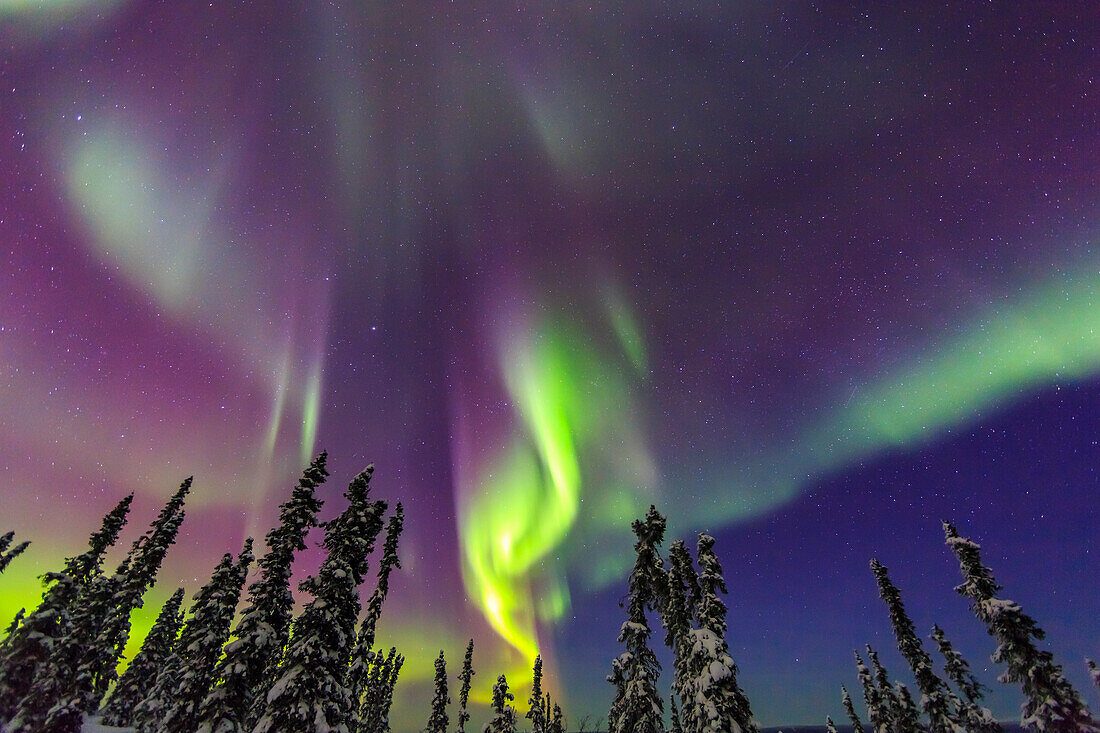
Yes, Fairbanks is one of the most reliable places on Earth to see the northern lights. The city lies directly under the auroral oval and experiences auroral activity on an average of 243 nights per year during the aurora season, which runs from late August through late April. Peak visibility occurs between 22:00 and 02:00 when the sky is darkest and geomagnetic activity is strongest. Clear winter nights offer the highest success rates, though autumn and early spring provide longer hours of darkness.
Fairbanks records more auroral displays per year than Reykjavik, Tromsø, or Yellowknife. The difference comes down to geography and weather patterns. The auroral oval—a permanent feature of Earth's magnetosphere—centers on the geomagnetic north pole, which currently sits in the Canadian Arctic. Fairbanks lies at the southern edge of this oval, positioned where the charged particles streaming from the sun interact most predictably with the upper atmosphere. While other northern cities share similar latitudes, Fairbanks benefits from a continental interior climate that produces fewer clouds than coastal regions. The Brooks Range to the north blocks Pacific moisture, and the Alaska Range to the south shields the Tanana Valley from Gulf of Alaska storm systems. The result is a microclimate with clear skies on roughly 60 percent of winter nights. The aurora season in Fairbanks spans eight months. Activity begins in late August when nights grow long enough for darkness to coincide with peak auroral hours. September and October offer moderate temperatures and extended visibility windows before the solstice. December through February bring the coldest conditions—often below minus 20 degrees Fahrenheit—but also the darkest skies and the most intense geomagnetic storms. March and April close the season with milder weather and the return of manageable overnight temperatures. Displays vary in intensity based on solar wind conditions, but even a modest KP index of 2 or 3 typically produces visible curtains and arcs over Fairbanks. The phenomenon is free to observe from any location with an unobstructed northern horizon and minimal light pollution. Public parks along Chena Hot Springs Road, Murphy Dome, and Ester Dome offer accessible vantage points within a short drive of the city center. Understanding what drives auroral activity helps set realistic expectations. The northern lights are not a nightly guarantee, even in Fairbanks. Solar wind speeds, interplanetary magnetic field orientation, and cloud cover all influence visibility. During solar maximum—the peak of the sun's eleven-year cycle—geomagnetic storms occur more frequently, and auroras reach farther south. Fairbanks remains visible under the oval throughout the cycle, but higher KP indices produce brighter, more dynamic displays with faster movement and more vivid greens and reds. The geomagnetic latitude of Fairbanks places it in a zone where even quiet auroral substorms produce visible light, a structural advantage that coastal cities at similar geographic latitudes cannot match. Visitors who plan multi-night stays and monitor auroral forecasts through NOAA or the University of Alaska Geophysical Institute significantly improve their odds of witnessing a strong display.
“Fairbanks lies at the southern edge of the auroral oval, positioned where charged particles from the sun interact most predictably with the upper atmosphere.”
Getting to Fairbanks for Northern Lights Viewing
Fairbanks is located in interior Alaska and is primarily accessible via Fairbanks International Airport (FAI). Visitors often rely on rental vehicles to reach dark viewing locations away from city light pollution.
Fairbanks International Airport (FAI)
Alaska Route 3 (Parks Highway)
Alaska Route 2 (Richardson Highway)
Is Fairbanks a Good Place to See the Northern Lights for Free?
The Northern Lights are a natural atmospheric phenomenon, and viewing them from public areas in Fairbanks requires no admission payment. Costs only apply if choosing private tours or specific infrastructure services.
An adult pays 0 USD for public viewing, with total costs depending solely on whether one selects optional paid private guided services.
Essential Checklist for Your Fairbanks Northern Lights Trip
Fairbanks sits inside the auroral oval, offering some of the continent's most reliable northern lights viewing when you come prepared for sub-zero conditions.
-
Download an aurora forecast app — Real-time KP index and cloud cover data help you choose the right night.
-
Pack insulated boots rated to -40°F — Standing outdoors for hours in January requires serious cold-weather footwear.
-
Bring a headlamp with red-light mode — Preserves your night vision while navigating gear and checking settings.
-
Prepare a DSLR or mirrorless camera with manual controls — Long exposures at wide apertures capture detail invisible to the naked eye.
-
Pack extra batteries in an inner pocket — Lithium cells lose 50% capacity below freezing; body heat keeps backups warm.
-
Layer merino base layers and a windproof shell — Clear nights drop to -20°F; moisture-wicking fabrics prevent sweat chill.
-
Bring hand warmers and a thermos — Active heat sources extend your viewing window when temperatures plummet past midnight.
Check availability
Frequently asked questions about visiting Fairbanks for the aurora
Everything you need to know about is fairbanks a good place to see the northern lights