

Quick answer
The northern lights are visible in Fairbanks from late August through mid-April, with peak activity occurring during the equinox months of September and March. Winter months from December through February offer the longest periods of darkness, though colder temperatures and potential cloud cover can affect viewing. Summer months from May through early August experience near-continuous daylight, making aurora observation impossible regardless of solar conditions.
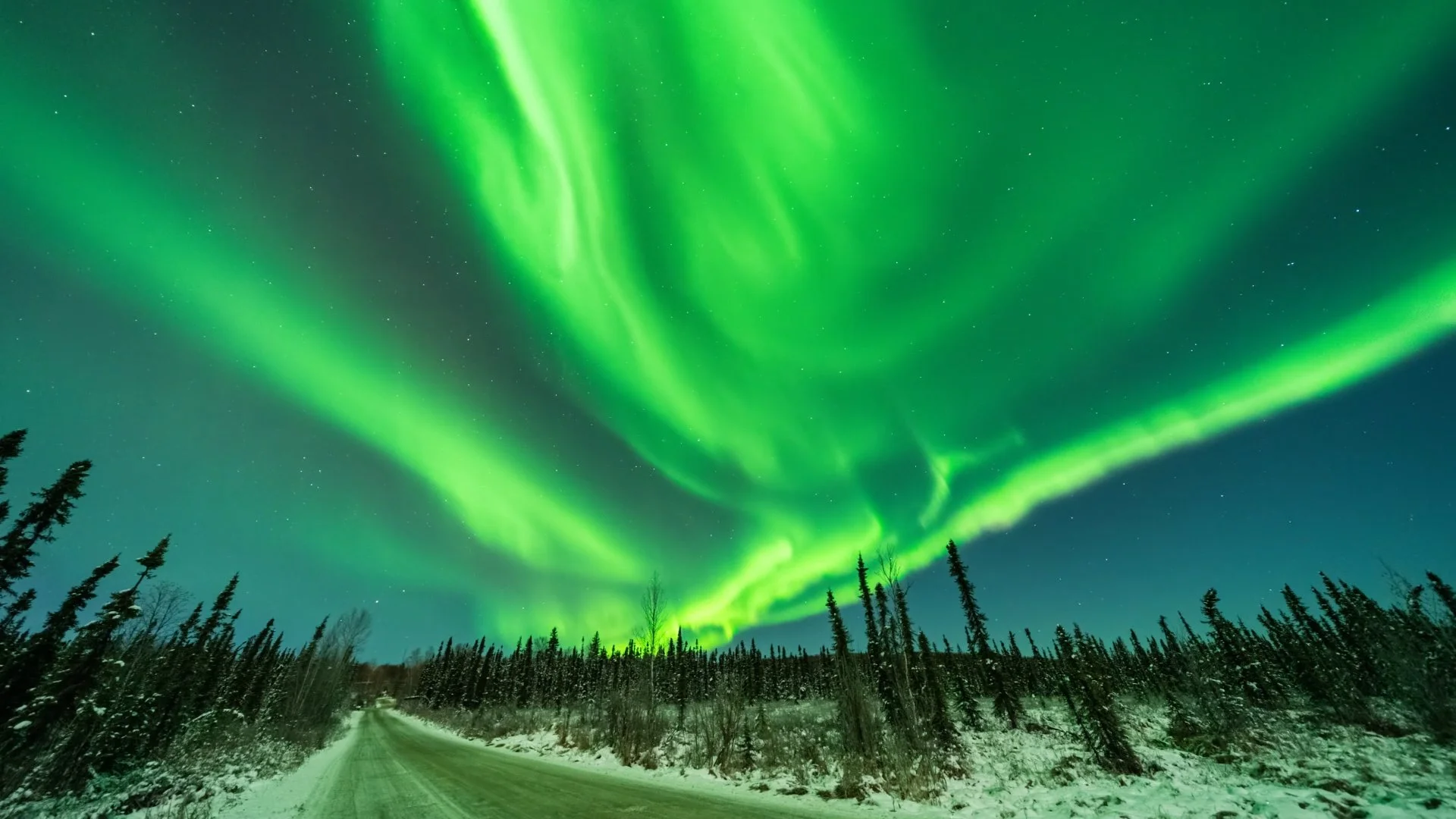
Fairbanks records aurora sightings on more than 240 nights per year, but that figure collapses the critical distinction between possibility and probability. The fairbanks northern lights time of year depends on two independent variables: geomagnetic activity, which follows an eleven-year solar cycle and remains outside human control, and seasonal darkness, which follows a predictable calendar tied to latitude. The city's position at 64.8° north places it within the auroral zone, the ring-shaped region where charged particles from the solar wind collide with atmospheric gases. During periods of elevated solar activity, those collisions produce the green and occasional red curtains visible across the subarctic sky. But visibility requires darkness, and Fairbanks experiences extreme seasonal variation in daylight. From late May through mid-August, civil twilight persists through the night, washing out even strong auroral displays. The viewing season begins in earnest once astronomical darkness returns in late August, extending through mid-April when lengthening days again compromise contrast. September and March anchor the fairbanks northern lights time of year guide for statistical reasons. Equinox months see elevated geomagnetic storm frequency due to the Russell-McPherron effect, a geometric alignment between Earth's magnetic field and the solar wind. March additionally benefits from residual winter darkness without the temperature extremes of January, when thermometers regularly fall below negative thirty degrees Fahrenheit. Winter solstice in December delivers the longest nights—over twenty hours of darkness—but also the highest probability of ice fog, a low-lying crystalline mist that forms when moisture freezes in still air and obscures the sky entirely. Viewing from Fairbanks itself remains possible, though light pollution from the city center reduces contrast. Most dedicated aurora chasers drive north along the Steese or Elliott highways, where pullouts and gravel access roads provide unobstructed horizons. The Geophysical Institute at the University of Alaska Fairbanks publishes a nightly aurora forecast, a zero-to-nine scale that estimates visibility based on planetary K-index and local cloud cover. Forecasts above four indicate high probability, though displays can flare unexpectedly when coronal mass ejections strike Earth's magnetosphere with little advance notice.
“Fairbanks records aurora sightings on more than 240 nights per year, but visibility requires both geomagnetic activity and seasonal darkness.”
Fairbanks Northern Lights Time Of Year: Seasonal and Daily Windows
The aurora season in Fairbanks spans from late August through April, with the darkest months providing the most extended windows for observation. Regardless of the month, the best arrival window is 22:00–02:00, when peak darkness increases the statistical probability of aurora activity.
Late August–September
Moderate crowdsCool, 30°F to 50°F. Early season offers milder temperatures and snow-free ground.
October–March
Low to moderateCold, -20°F to 20°F. These months provide the longest hours of darkness for viewing.
April
Low crowdsChilly, 10°F to 35°F. The season concludes as daylight hours begin to increase significantly.
Verdict: The best period for viewing is from October through March, arriving during the peak window of 22:00–02:00.
Fairbanks Northern Lights Time Of Year: Viewing Availability
Public viewing areas in Fairbanks are accessible 24 hours a day, allowing visitors to monitor the skies at any time. The following schedule reflects the constant availability of these public spaces for aurora observation.
| Monday | 00:00–23:59 | |
|---|---|---|
| Tuesday | 00:00–23:59 | |
| Wednesday | 00:00–23:59 | |
| Thursday | 00:00–23:59 | |
| Friday | 00:00–23:59 | |
| Saturday | 00:00–23:59 | |
| Sunday | 00:00–23:59 |
Fairbanks Northern Lights Time Of Year: Preparation and Gear
Fairbanks winter viewing demands preparation for extreme cold and extended outdoor exposure in sub-zero conditions.
-
Pack insulated boots rated to -40°F — Frostbite risk is high during multi-hour viewing sessions in Fairbanks winter.
-
Bring layered thermal clothing and face protection — Temperatures regularly drop below -20°F during peak aurora months.
-
Charge camera batteries and pack spares — Lithium batteries drain rapidly in extreme cold.
-
Download aurora forecast apps before arrival — Cell service can be limited in rural viewing locations.
-
Arrange transport to dark-sky locations — Light pollution from Fairbanks requires traveling 20+ miles north.
-
Pack hand and toe warmers — Essential for maintaining circulation during stationary viewing periods.
-
Bring a thermos with hot drinks — Helps maintain core temperature during late-night sessions.
Fairbanks Northern Lights Time Of Year: Nearby Regional Attractions
Fairbanks offers several regional attractions that complement the nocturnal schedule of aurora viewing. These sites provide daytime enrichment and winter activities that align with your travel itinerary.
Chena Hot Springs Resort
Soaking in natural geothermal pools provides a contrast to the cold night air spent waiting for the aurora. It serves as a retreat while staying within the region for evening viewings.
University of Alaska Museum of the North
This museum offers insights into Alaskan natural and cultural history, providing context for the environment you are exploring. It is a suitable daytime activity before your late-night excursions.
Pioneer Park
This historic park features local museums and galleries that reflect the heritage of the interior. Visiting during the day allows you to prepare for your peak darkness arrival window at your viewing location.
Check availability
Frequently asked questions about fairbanks northern lights time of year
Everything you need to know about fairbanks northern lights time of year